ProductBeyond Burger Patties
Year2026
First Impressions: Unboxing the Beyond Burger Patties
The 2026 iteration of the Beyond Burger patty arrives with a familiar yet refined presentation, underscoring the brand’s commitment to iterative improvement in the competitive plant-based market. Our assessment focuses on the sensory aspects – the sizzle, the aroma, and the often-discussed iron taste – critical elements for any product aiming to replicate the traditional beef burger experience.
👍 Pros
- Convincing beef-like sizzle and cooking aromas.
- Texture closely approximates ground beef, especially when cooked properly.
- Significant reduction in saturated fat compared to conventional beef.
- Widely available across major grocery chains and foodservice.
👎 Cons
- The distinct iron/metallic taste can be off-putting for some.
- Price point remains higher than conventional ground beef.
- Can overcook and dry out if not monitored carefully.
- Ingredient list is extensive, which may concern some consumers.
Packaging and Presentation
The Beyond Burger patties are typically found in a recyclable cardboard box, often containing two or four pre-formed patties. The packaging clearly displays nutritional information, ingredient lists, and cooking instructions. For 2026, the aesthetic leans towards a clean, modern design, emphasizing the “plant-based” origin while subtly hinting at its beef-like qualities. Each patty is usually separated by a thin layer of plastic or wax paper to prevent sticking, maintaining their shape until cooking.

Initial Appearance and Feel
Out of the package, the Beyond Burger patties present a remarkably close visual resemblance to raw ground beef. They possess a deep reddish-pink hue, interspersed with visible white flecks that mimic animal fat marbling. The texture is firm yet pliable, with a slightly moist surface. When handled, there’s a subtle greasiness, akin to beef, suggesting the fat composition has been carefully engineered. This initial visual and tactile impression sets a high bar for the subsequent cooking and tasting experience.
The Sizzle and Smell Test: Cooking the Beyond Burger
The cooking process is where the Beyond Burger truly begins to differentiate itself from many other plant-based alternatives. The transformation from raw patty to cooked burger involves a dynamic interplay of sound, aroma, and visual change that is fundamental to the grilling or pan-frying experience.
Pan-Frying Performance
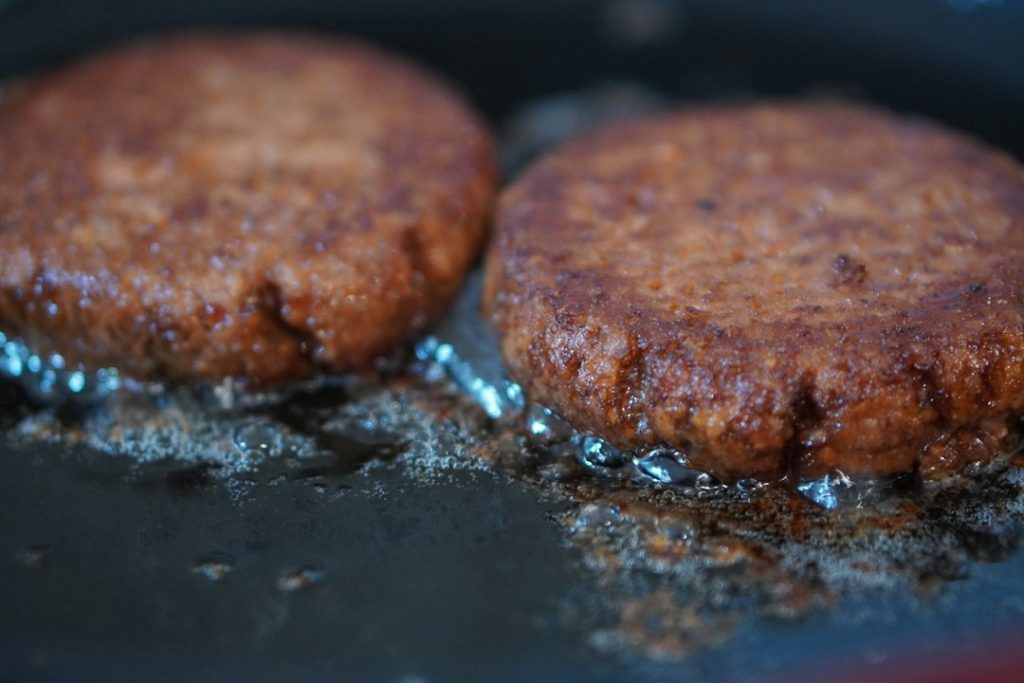
When pan-fried, the Beyond Burger patties release a satisfying sizzle, a sound often missing in less sophisticated plant-based options. Medium-high heat is recommended. As the patties cook, they develop a deep brown crust, with some charring on the edges, particularly if a little oil is used. The patties contract slightly but maintain their structural integrity remarkably well. Fat renders from the patty, though it appears less viscous than beef fat. Careful flipping is required to achieve an even sear on both sides without breaking the patty apart.

Grilling Experience
Grilling the Beyond Burger yields arguably the most authentic experience. On a preheated grill (around 400-450°F or 200-230°C), the patties sear effectively, producing distinct grill marks. The sizzle is pronounced, and smoke is generated, contributing to the overall sensory appeal. Unlike some plant-based burgers that can disintegrate on the grill, the Beyond Burger holds its form, allowing for easy turning. Flare-ups can occur due to the oil content, so managing the heat is crucial for preventing excessive charring or burning.
Aromas During Cooking: Identifying Key Notes
The aroma emitted during cooking is one of the Beyond Burger’s strongest suits. It closely replicates the savory, slightly fatty smell of beef burgers cooking. Key notes include a pronounced meaty fragrance, often described as rich and robust. There are also underlying savory, almost umami notes, contributed by ingredients like yeast extract and spices. Crucially, for those sensitive to it, the characteristic metallic or “iron-like” scent also becomes noticeable during the cooking process, a byproduct of the heme-like compounds used in its formulation.
Taste Analysis: Beyond Burger’s Iron Taste and Overall Flavor Profile
The taste is the ultimate arbiter for any meat alternative. Beyond Burger aims for a direct mimicry of beef, incorporating elements that contribute to both the familiar and the controversial aspects of its flavor.
The “Iron” Taste: Is it Present and How Intense?
Yes, the “iron” or metallic taste is undeniably present in the Beyond Burger. This characteristic is primarily attributed to soy leghemoglobin (heme), a genetically engineered yeast-derived ingredient that mimics the molecule found in animal muscle responsible for the “meaty” flavor and color. In 2026, the intensity of this taste has been refined; it’s less of a raw metallic tang and more of a subtle, coppery undertone that integrates into the overall savory profile. However, for consumers unaccustomed to or averse to this specific note, it can still be perceived as distinctly “off” or artificial. Its prominence can also be influenced by cooking method and seasoning. Some find it adds to the “beefiness,” while others find it detracts significantly.

Texture Comparison: Beyond Burger vs. Traditional Beef
In terms of texture, the 2026 Beyond Burger patties are a significant achievement. When cooked to medium or medium-well, the texture closely resembles that of a medium-fat ground beef patty. It has a pleasing chew, a slight tenderness, and a discernible grain that mimics muscle fibers. Unlike mushier plant-based options, it offers resistance to the bite. However, it doesn’t quite achieve the same complex textural nuances as high-quality beef, particularly the fine breakdown and juiciness retention of well-marbled cuts. Overcooking exacerbates a slightly drier, more crumbly texture compared to beef.
Savory Notes and Umami Factor
Beyond the iron taste, the patties deliver a robust savory and umami experience. Ingredients like natural flavors, yeast extract, and spices contribute to a deep, satisfying flavor profile. When seasoned appropriately and served on a bun with typical burger accompaniments (lettuce, tomato, onion, pickles, condiments), the Beyond Burger performs admirably, often fooling less discerning palates into believing they are eating beef. The umami is well-developed, providing a foundational richness that enhances the overall taste.
How Beyond Burger Stacks Up Against Competitors in 2026
By 2026, the plant-based burger landscape is intensely competitive. The Beyond Burger remains a top-tier contender, particularly for those prioritizing a close sensory mimicry of beef. Newer products may offer cleaner ingredient lists or slightly different flavor profiles, but Beyond Burger’s established ability to sizzle, smell, and satisfy the craving for a traditional burger keeps it relevant. Its main rival, the Impossible Burger, offers a similar heme-based approach, often perceived as having a slightly more intense “meaty” flavor but sometimes a less convincing texture. Other brands are exploring different protein bases (pea, fava bean, fungi) which offer distinct taste and texture experiences, appealing to different consumer preferences.
Nutritional Deep Dive: What’s Inside the Beyond Burger?
Understanding the nutritional composition is key to evaluating the Beyond Burger as a dietary component, especially when compared to its beef counterpart.
A standard 4oz (113g) Beyond Burger patty typically contains around 230 calories, 14g of total fat (5g saturated fat, 0g trans fat), 3g of carbohydrates (0g fiber, 0g sugar), and 20g of protein. The protein primarily comes from pea, mung bean, and brown rice isolates. Fat content is derived from canola, coconut, and sunflower oils. Sodium levels are generally higher than in unprocessed beef. Key ingredients include water, pea protein isolate, expeller-pressed canola oil, refined coconut oil, natural flavors, 2% or less of: potato starch, salt, spices, potassium chloride, fruit and vegetable juice for color, yeast extract, carrageenan, methylcellulose, and soy lecithin. Allergen information typically includes soy.
Macronutrient Breakdown (Protein, Fat, Carbs)
The macronutrient profile is engineered to mirror beef. A typical 4-ounce patty provides approximately 20 grams of protein, a comparable amount to beef. Fat content is also similar, often around 14 grams, but with a different fatty acid profile – higher in monounsaturated and polyunsaturated fats (from plant oils) and lower in saturated fat than many beef burgers, though the use of coconut oil does contribute saturated fat. Carbohydrates are minimal, essentially negligible, with no dietary fiber or sugars.
Key Ingredients and Their Purpose
The ingredient list is extensive, reflecting the complexity of replicating beef. Pea, mung bean, and brown rice protein isolates form the protein base. Canola, coconut, and sunflower oils provide fat and juiciness. Natural flavors, yeast extract, and spices contribute to the savory taste. Potato starch acts as a binder. Fruit and vegetable juice (like beet juice) provides the characteristic red color. The controversial soy leghemoglobin (heme) is crucial for the “meaty” flavor and color. Methylcellulose is used as a binder and texturizer, and soy lecithin acts as an emulsifier.
Allergen Information and Considerations
The primary allergen present in the Beyond Burger is soy, due to the inclusion of soy lecithin and, in some formulations, potentially other soy derivatives. Consumers with soy allergies must avoid this product. While it is a non-GMO product, the use of genetically engineered yeast for heme production is a point of discussion for some consumers. Its highly processed nature means it’s not a whole-food option, which may be a consideration for those focusing on minimally processed diets.
Beyond Burger vs. Impossible Burger: A 2026 Head-to-Head
The rivalry between Beyond Meat and Impossible Foods has defined the plant-based burger market for years. By 2026, both have evolved, but fundamental differences persist.
| Feature | Beyond Burger (2026) | Impossible Burger (2026) |
|---|---|---|
| Primary Protein Source | Pea, mung bean, brown rice isolates | Soy protein concentrate |
| “Meaty” Element | Soy leghemoglobin (heme) | Soy leghemoglobin (heme) |
| Taste Profile | Savory, slightly less intensely “beefy,” more distinct iron undertone for some | Robustly “beefy,” richer umami, iron taste can be more pronounced |
| Texture | Closer to traditional ground beef texture, slightly drier when overcooked | Softer, more cohesive, can sometimes feel slightly “pasty” |
| Sizzle & Smell | Excellent, authentic beef-like sizzle and aroma | Very good sizzle, rich meaty aroma |
| Nutritional Profile (approx. per 4oz) | ~230 kcal, 14g Fat (5g sat), 20g Protein, 3g Carb | ~240 kcal, 14g Fat (6g sat), 19g Protein, 3g Carb |
| Allergens | Soy | Soy |
| Price Point (estimated) | $5.00 – $7.00 per 2-pack | $5.50 – $7.50 per 2-pack |
Taste and Texture Differences
The core difference often lies in the perceived intensity and execution. Beyond Burger’s texture is frequently lauded for its grain and chew, feeling more like traditional crumbled ground beef. The Impossible Burger, while robustly flavored, can sometimes present a smoother, more homogenous texture. Taste-wise, Beyond Burger’s iron note might be more subtle or coppery, while Impossible Burger’s heme integration can lead to a bolder, sometimes perceived as more authentic, beefiness, though this can also amplify the metallic aspect for some.
Sizzle and Cooking Behavior
Both products excel in sizzle and aroma, significantly outperforming older generations of plant-based burgers. Beyond Burger tends to develop a slightly crispier, more distinct crust when pan-fried or grilled. Impossible Burger also sizzles well and browns effectively, holding together firmly. Neither product typically shrinks excessively like beef.
Nutritional Profiles Compared
Nutritionally, they are remarkably similar, both designed as direct beef replacements. Calorie counts, fat (including saturated fat), protein, and carbohydrate levels are almost identical per serving. Both are highly processed foods with long ingredient lists. The primary allergen for both is soy.
Price and Value Proposition
In 2026, both Beyond Burgers and Impossible Burgers remain premium-priced compared to conventional ground beef. Pricing can fluctuate based on retailer, promotions, and region, but generally, they fall within a similar range, often costing two to three times as much as conventional beef per pound. Their value proposition hinges on offering a comparable sensory experience for consumers reducing or eliminating meat consumption, rather than on being a budget-friendly alternative.
Is the Beyond Burger Worth the Hype in 2026?
The “hype” around Beyond Burger has evolved from initial novelty to sustained market presence. In 2026, its worth is judged not by groundbreaking innovation, but by consistent performance and its ability to satisfy a specific consumer need.

Who is the Beyond Burger For?
The Beyond Burger is ideal for several groups: vegetarians and vegans seeking a highly realistic meat substitute for familiar dishes like burgers; “flexitarians” actively reducing meat intake but not wanting to compromise on the sensory experience; and perhaps even curious omnivores looking to explore plant-based options without a drastic shift in taste or texture. Its widespread availability also makes it accessible for those seeking convenience.
Potential Improvements for Future Versions
While excellent, there’s always room for refinement. Future iterations could focus on: further reducing the intensity or masking the “iron” taste for wider palatability; simplifying the ingredient list to appeal to the “clean eating” segment; improving heat tolerance to prevent dryness when overcooked; and potentially lowering the saturated fat content further through oil blend optimization. Price reduction remains a long-term goal for broader market adoption.
Final Verdict on Sizzle, Smell, and Iron Taste
The Beyond Burger patty in 2026 undeniably delivers on sizzle and smell, creating an authentically appealing cooking experience that rivals beef. The texture is commendably close, offering a satisfying chew and mouthfeel. The defining characteristic, the “iron” taste derived from heme, remains a polarizing element. While its integration has improved, becoming a more nuanced undertone for some, it can still be a deal-breaker for others. For consumers prioritizing a near-identical sensory experience to beef and willing to accept this specific flavor note, the Beyond Burger remains a leading choice. However, those sensitive to metallic tastes may prefer alternatives that focus on different flavor profiles or prioritize less imitative plant-based options.